
5-10
Years Of Experience
Floors Built for Real Basement Use
Basement Epoxy and Concrete Flooring in Vancouver for slabs that are stained, bare, or never properly sealed
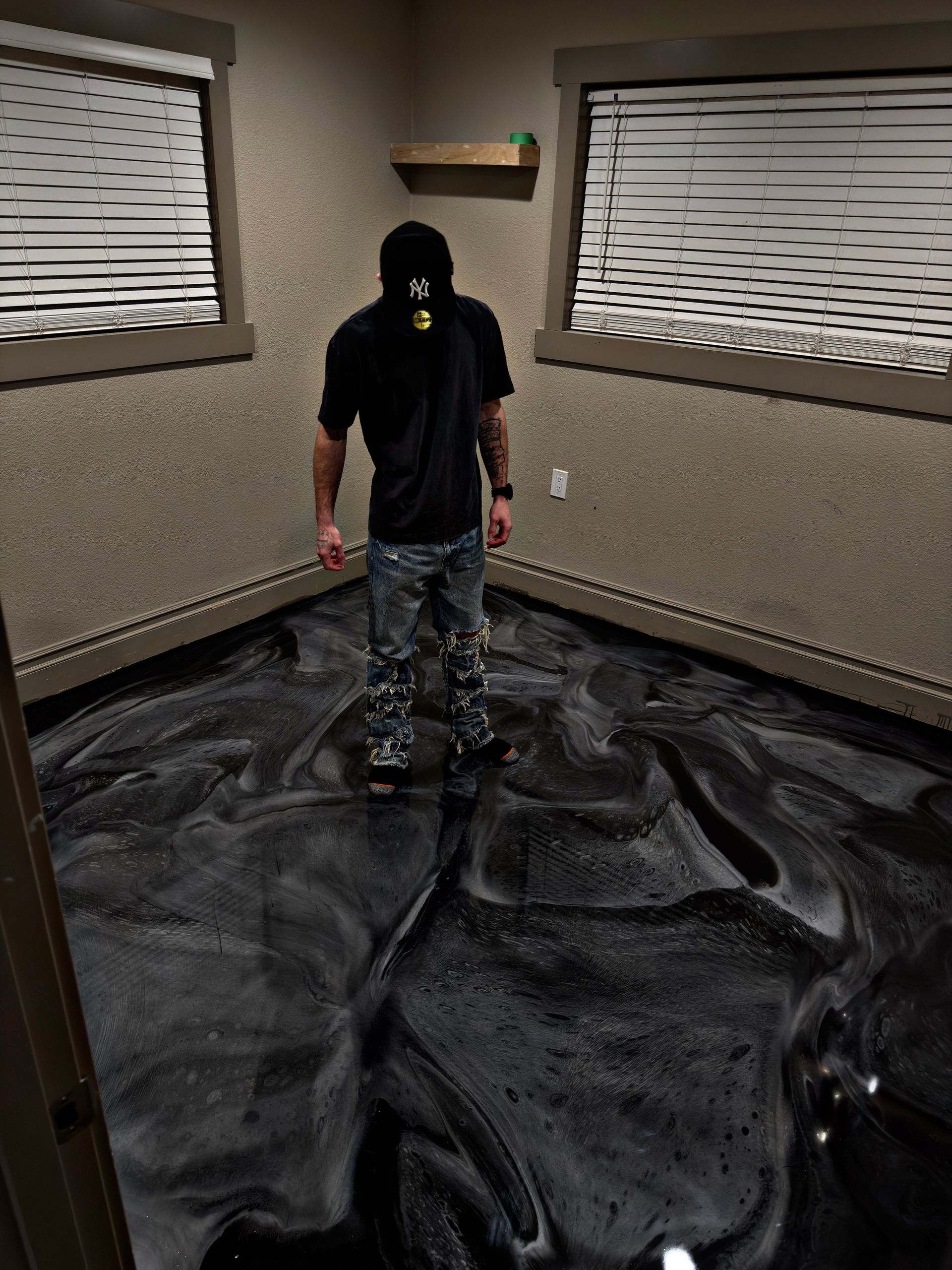
Bare concrete poured decades ago without a vapor barrier is one of the most common basement conditions in Vancouver, and it creates a specific problem: moisture moves through the slab and any coating applied over it without proper preparation will eventually lift, bubble, or peel. Tru Resins addresses that problem directly, finishing basement floors with epoxy and sealed concrete systems that account for what is actually happening beneath the surface. The owner performs every install personally, which means the same person who assesses the slab is the one applying the finish.
Every job starts with a moisture check and a visual inspection for efflorescence, the white mineral deposit that forms when water moves through concrete and signals that the slab needs sealing before anything else goes down. The surface is then ground to open the pores, cracks are routed and filled, and a primer or moisture-tolerant base coat is applied before the decorative layers. Cure scheduling is built into the plan from the beginning, because basement environments often require the air to stay warm and dry for the coating system to set properly.
Schedule a slab evaluation with Tru Resins to identify moisture conditions and surface issues before choosing a finish system.
What Proper Basement Floor Coating Actually Requires
The difference between a basement floor that holds up for years and one that fails in the first season usually comes down to what happened before the first coat was applied. Grinding opens the concrete to a texture the primer can grip; skipping that step leaves the coating sitting on top of a closed surface with nowhere to bond. Cracks filled before coating prevent the finish from reflecting those stress lines later, and a moisture-tolerant base coat is the layer that handles the vapor pressure older slabs commonly produce.
Once the system cures, the floor reads as a finished room rather than a utility space. Spills wipe up rather than soaking in. The surface holds up under workbench use, storage, or regular foot traffic without showing wear at the edges or around drains where unprotected concrete typically deteriorates first. Hazel Dell and Fisher's Landing homes with unfinished or partially finished lower levels are common candidates for this type of work, particularly in houses where the original slab was poured without any surface treatment at all.
The scope of work covers slab assessment, mechanical profiling, crack repair, and all coating layers through the final finish coat. What falls outside the scope is structural repair to the slab itself or waterproofing systems that address bulk water intrusion from the exterior; those require a different contractor before floor finishing begins.
Questions About How Basement Floor Coating Works
The questions below cover how the work is performed and what affects the outcome on Vancouver basement slabs specifically.
What does moisture testing actually involve before an epoxy coating is applied?
A moisture meter and a calcium chloride or relative humidity test establish how much vapor is moving through the slab; results determine whether a standard primer or a moisture-tolerant barrier coat is the right starting layer for your floor.
How does efflorescence affect whether a basement floor can be coated right away?
Efflorescence has to be removed mechanically before coating because it indicates active moisture migration, and any coating applied over it will lose adhesion as the minerals continue to deposit beneath the surface.
What happens to existing cracks during the prep process?
Cracks are routed slightly wider and filled with a repair compound matched to the expected movement in that slab; this creates a stable base so the finish coat does not mirror those lines after cure.
Why does cure scheduling matter more in a basement than on a garage floor?
Basements typically have lower air exchange and more variable humidity than a garage, so the cure window needs to account for air temperature and moisture levels to ensure each coat sets before the next one goes down.
How do you know when the finished floor is ready for furniture and storage?
The product data sheet for the specific coating system sets the recoat and return-to-service intervals; in Vancouver basement conditions, that is typically 24 hours before light foot traffic and longer before heavy loads are placed on the floor.
Tru Resins also installs basement epoxy and concrete flooring in Camas, Washougal, Ridgefield, Battle Ground, and Portland. To move forward, contact Tru Resins at (971) 409-1295 and describe the current condition of your slab so the right assessment approach can be planned before the visit.