
5-10
Years Of Experience
Garage Floors Sealed Against What Garages Actually Do
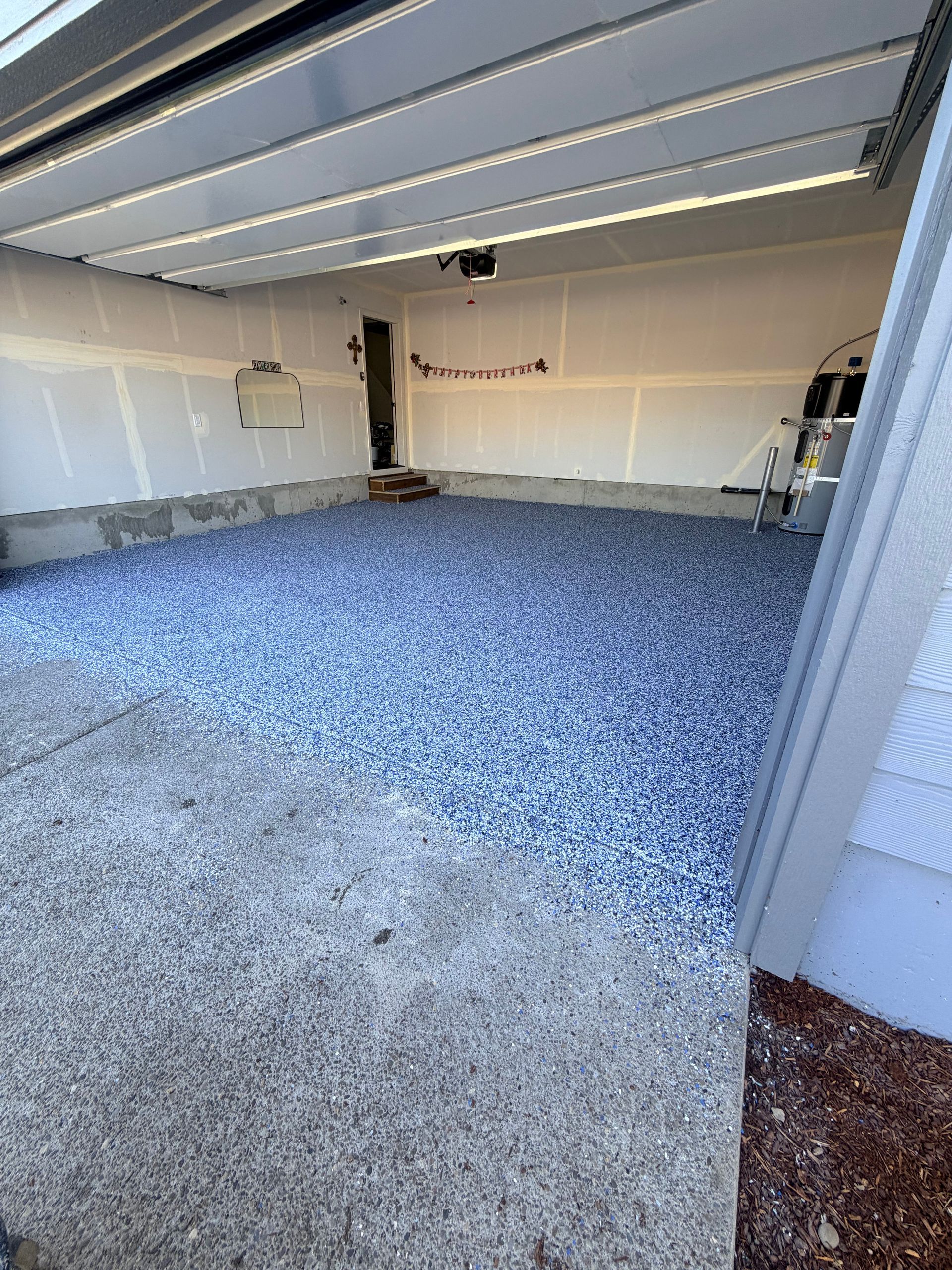
Garage epoxy flooring in Vancouver for attached slab-on-grade homes where bare concrete stains, dusts, and absorbs what gets spilled on it
Bare concrete in a residential garage is porous, absorbs oil and fluid spills immediately, dusts constantly, and shows tire marks that cannot be cleaned out once they are set. Tru Resins installs garage epoxy floors for homes across Vancouver and Clark County, and the owner handles every install himself so the preparation decisions made during the walkthrough are carried through to the final coat without being handed off. The garage is typically back in usable condition within a two-day schedule, with vehicles returning once the topcoat has completed its cure window.
The process is sequenced to address the most common points of failure before any coating goes down. The slab is ground or cleaned to create the bonding profile the epoxy needs—skipping this step is the primary reason DIY garage coatings peel within a year. Any cracks are filled at this stage, and moisture vapor transmission through the slab is assessed because a garage floor that sits on grade without a vapor barrier below can generate enough moisture pressure to lift a coating from underneath. Once the slab passes those checks, the base coat goes down, followed by the flake broadcast or solid color, and then a clear topcoat that provides the actual wear surface. Salmon Creek and Orchards neighborhoods are dominated by attached slab-on-grade residential garages built in the 1990s through 2010s—a construction profile where a well-prepared epoxy system is a direct fit for the substrate.
Connect with Tru Resins to walk through your garage slab and establish a coating plan before scheduling the install.
What Proper Garage Epoxy Installation Requires
The most important variable in a garage epoxy floor is not the topcoat product—it is the condition of the slab before any coating is applied. Concrete that has been contaminated by years of oil drips requires different preparation than a clean slab: oil-contaminated concrete may need degreasing followed by mechanical grinding before the base coat will bond, because oil saturated into the pores of the slab will prevent chemical adhesion no matter how good the coating material is. Tru Resins assesses the slab during the initial walkthrough and adjusts the prep approach accordingly, rather than running a standard sequence regardless of what the concrete looks like.
After the topcoat is fully cured, the garage floor does not absorb spills—oil, antifreeze, and road grime stay on the surface and wipe up with a mop. The floor no longer produces the fine concrete dust that settles on storage items and vehicle surfaces over time, because the sealer locks down the surface layer of the concrete. Tires do not mark the topcoat the way they mark raw concrete, and the surface cleans with the same effort as a kitchen floor rather than requiring scrubbing with chemical degreasers.
The schedule for returning vehicles to the garage is set before the job starts, not estimated on the last day of work. Topcoat cure times depend on the product used and the temperature inside the garage during cure, and those factors are accounted for in the project timeline so there is a clear date for when the garage is ready for full use. The garage is kept closed during cure to prevent contamination of the wet surface.
What Homeowners Ask Before Getting a Garage Epoxy Floor
The questions below address what homeowners in Clark County most commonly need clarified about the garage epoxy installation process, from slab preparation through to what happens once the floor is cured and in use.
Why does grinding the concrete matter before epoxy is applied to a garage floor?
Grinding removes the weak surface layer of the concrete and exposes the harder material below, which gives the epoxy a mechanical bond rather than just a surface-level adhesion. A garage floor that has been acid-etched instead of ground typically produces less reliable adhesion, particularly on slabs that have been sealed or troweled to a smooth finish during original construction.
How are oil stains in a garage slab treated before coating?
Oil that has penetrated the concrete requires degreasing with a penetrating cleaner followed by mechanical grinding to remove the contaminated surface layer. In heavily saturated areas, multiple degreasing passes may be needed before grinding, because oil remaining in the slab pores will bleed through the base coat and prevent bonding in those spots.
What is the topcoat's role in a garage epoxy system?
The topcoat is the surface the floor is actually used on—it takes the traffic, the tire contact, and the spills. The base coat and flake or color layer below it are protected by the topcoat and do not wear directly. The topcoat's thickness and formulation determine how long the system holds up under regular garage use before showing wear.
How does slab-on-grade construction in Vancouver affect the epoxy process?
Slab-on-grade garages sit directly on the ground without a crawl space below, which means moisture vapor can move upward through the slab from the soil beneath. Before coating, moisture is assessed using in-slab testing rather than visual inspection, because a slab can appear dry on the surface and still have high vapor transmission that will cause the coating to blister from below.
What should the garage floor look like when the job is finished and ready for use?
The surface should be uniform in sheen across the entire floor with no visible seam lines between roller passes, no bubbles or pinholes in the topcoat, and no visible evidence of patch repairs made during the prep phase. The floor should feel smooth and consistent underfoot with no gritty areas or sections that feel softer than the rest.
Tru Resins also installs garage epoxy flooring in Camas, Washougal, Ridgefield, Battle Ground, and Portland. Call (971) 409-1295 to arrange a garage walkthrough and get a clear picture of what your slab requires before the project is scheduled.